
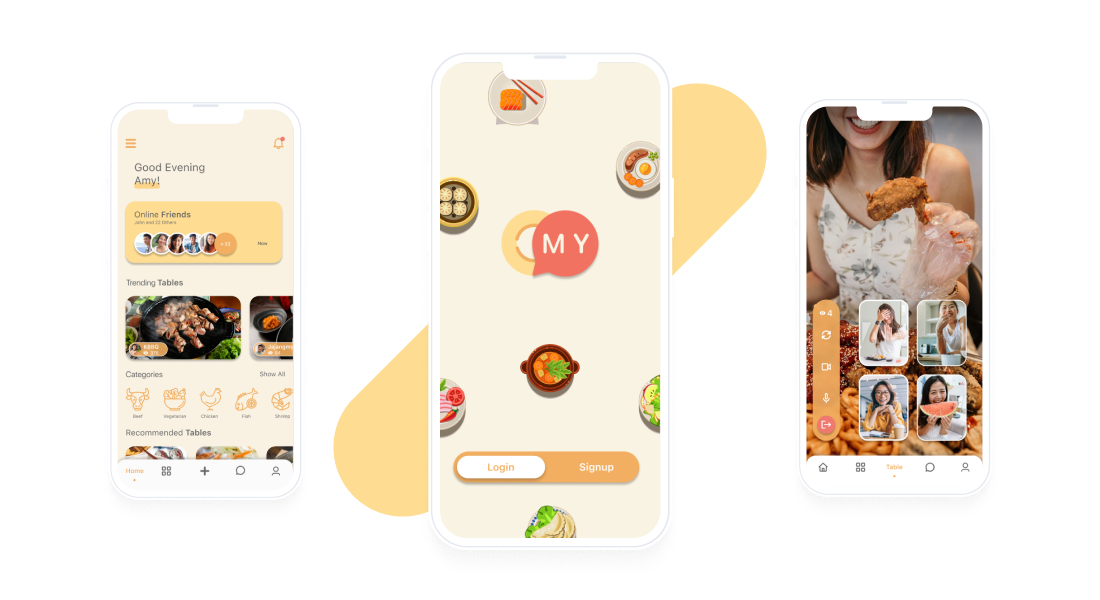
OMY is a social food app that helps users join a virtual table to talk and meet with others over a meal. Their goal is to combat the struggle of not eating out with friends and family during the pandemic. During this time, people have felt the need to meet others or reconnect with those they used to eat over a meal.
Design and prototype an app
Create new branding for OMY
80 Hours with 4 weeks
User Research, Interaction Design, UI, Branding, Prototyping, Usability Testing
Figma, Illustrator, Zoom
OMY's goal is to understand how the pandemic changed the way the users ate out. In addition, they want to understand some of the struggles to better direct them to an engaging app for their users. To start the project, I created a research plan to help identify the goals for this project.
To understand the user's pain points of going to the restaurant during the pandemic
Discover their experiences when eating wither others
The in-house dining market took a huge hit during the pandemic, with the number of sit-down diners in the U.S dropping by 100 percent in March 2020
People in the U.S. are continuing to cook more, with 71% saying they will continue to do so after the pandemic ends
Watching mukbang videos as a mechanism to overcome loneliness and seek companionship

Hi, my name is Tuan, and thank you for taking the time to help me today. I appreciate your time and feedback. For this project, I will be trying to learn how the pandemic impacted people’s eating habits. This information will help me get some insights from your experiences to determine the next step for this project. There are no right or wrong answers, so feel free to share your thoughts. This study will take no more than 30 minutes.
5/8 lived at home.
6/8 often ate out with friends and co-workers.
3/8 worked for a large tech company that provided food for them.
The participants that lived by themselves said they struggle with cooking alone
Participants who worked for large companies said that they
Enjoyed trying something new with others.
Some were open to going to a restaurant to eat again but most were cautious due to the new strain of COVID-19.
Don’t know what to cook
Hard to obtain certain ingredients
Tries to support local business during the hard times
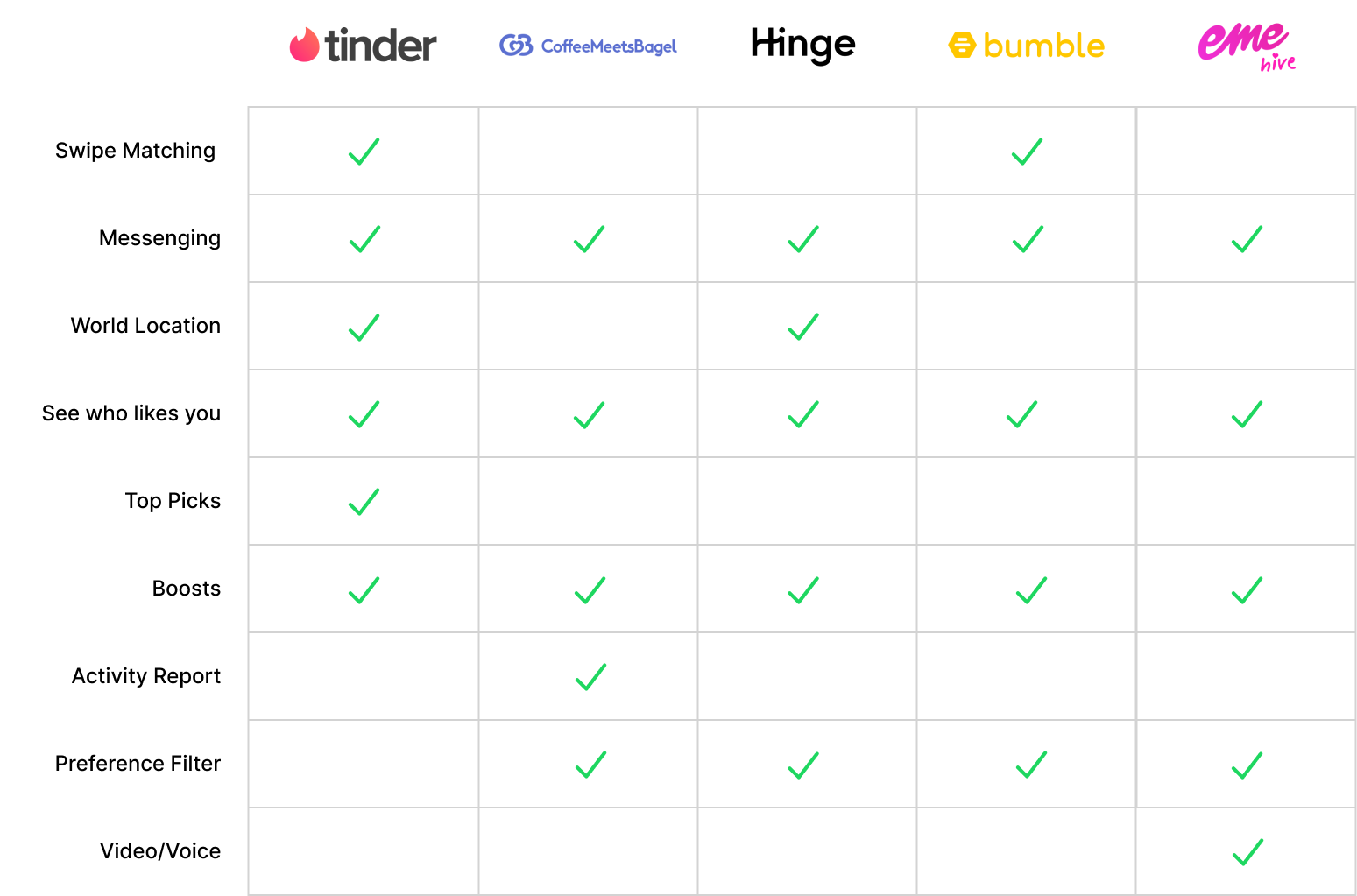
I took a look at various dating apps to see how to bring people together in a fun and engaging way. Each app had its strength in how you discover and get matched with other users.
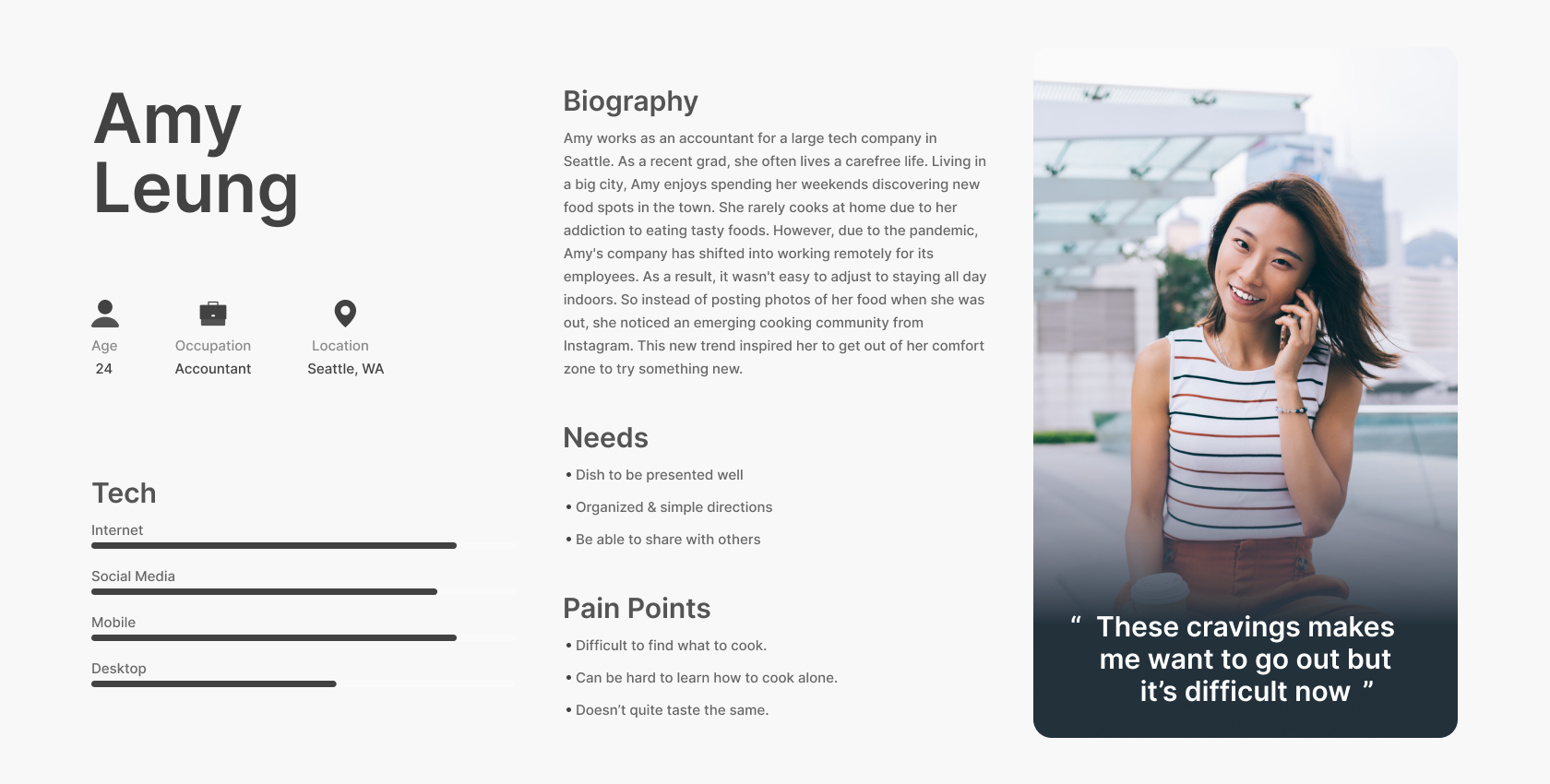
Based on my two rounds of interviews, I created my persona to match the my interviewee's needs and pain points.
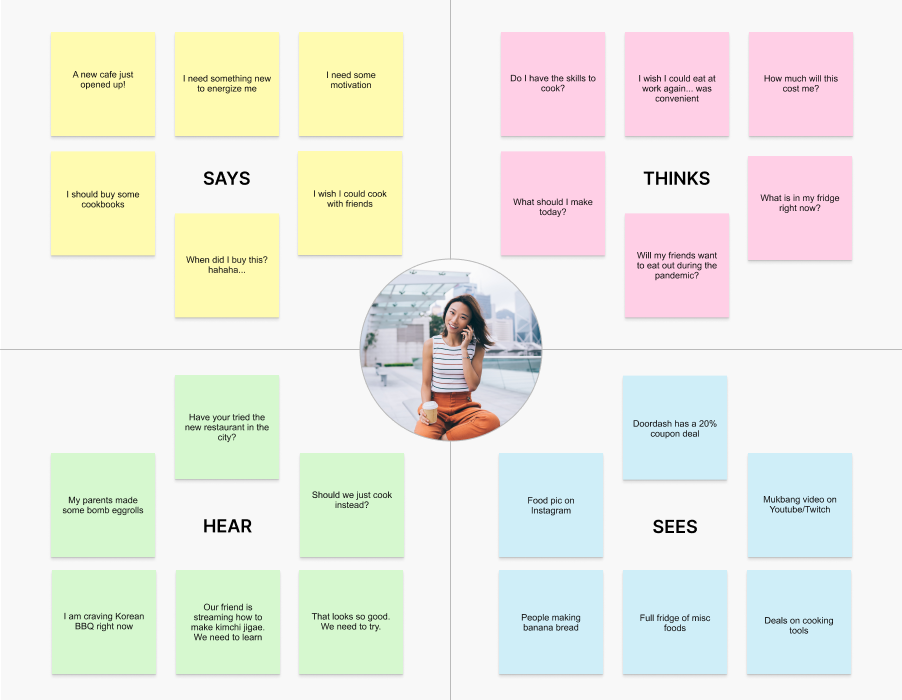
To explore different ideas for this project, I came up with over 20 how might we questions. These questions went through several iterations to narrow down the restaurant experience.
How might we bring the restaurant experience inside the home?
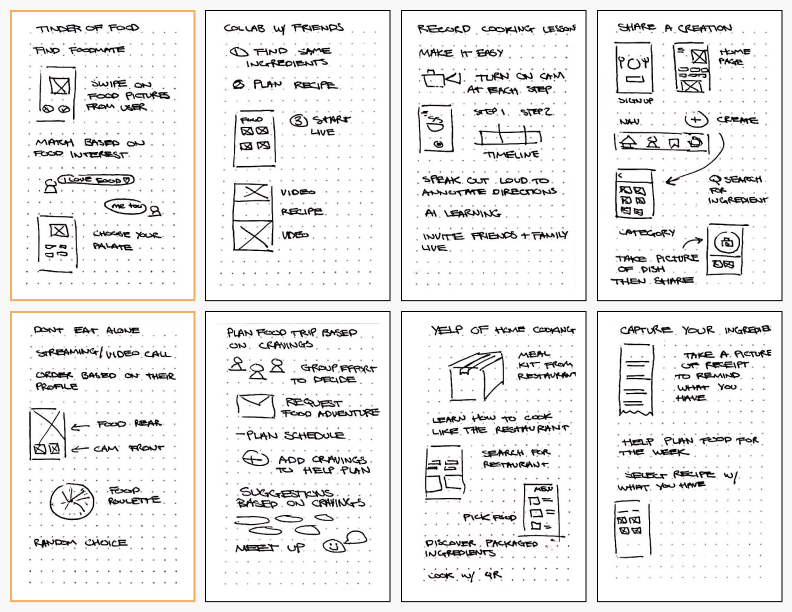
From 3 rounds of the crazy eight, I explored different directions based on how we might ask questions. The exercise helped me narrow down to two ideas that focused on conversing with others for the restaurant experience.
Going through the storyboard, I focused on how a user might be matched depending on what they eat. They can swipe left and right on what the other person is eating. This will match you with a user you will be able to communicate with.
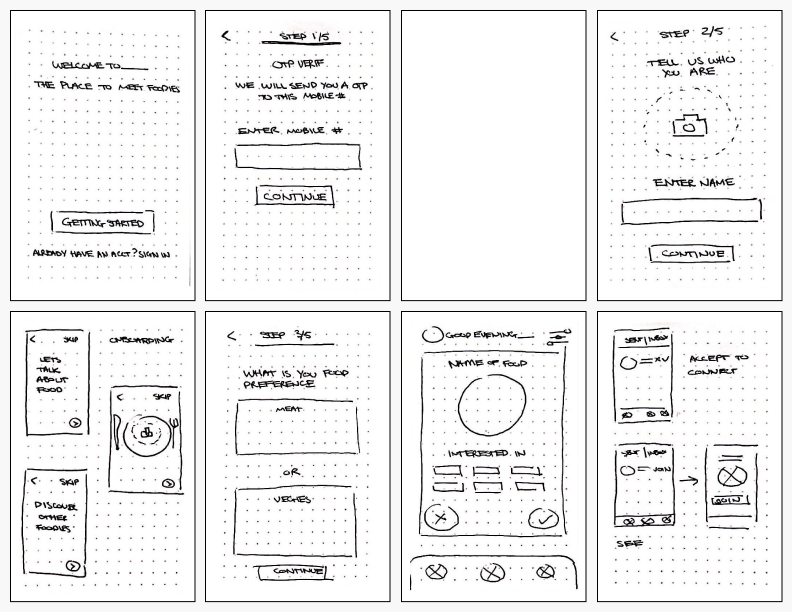
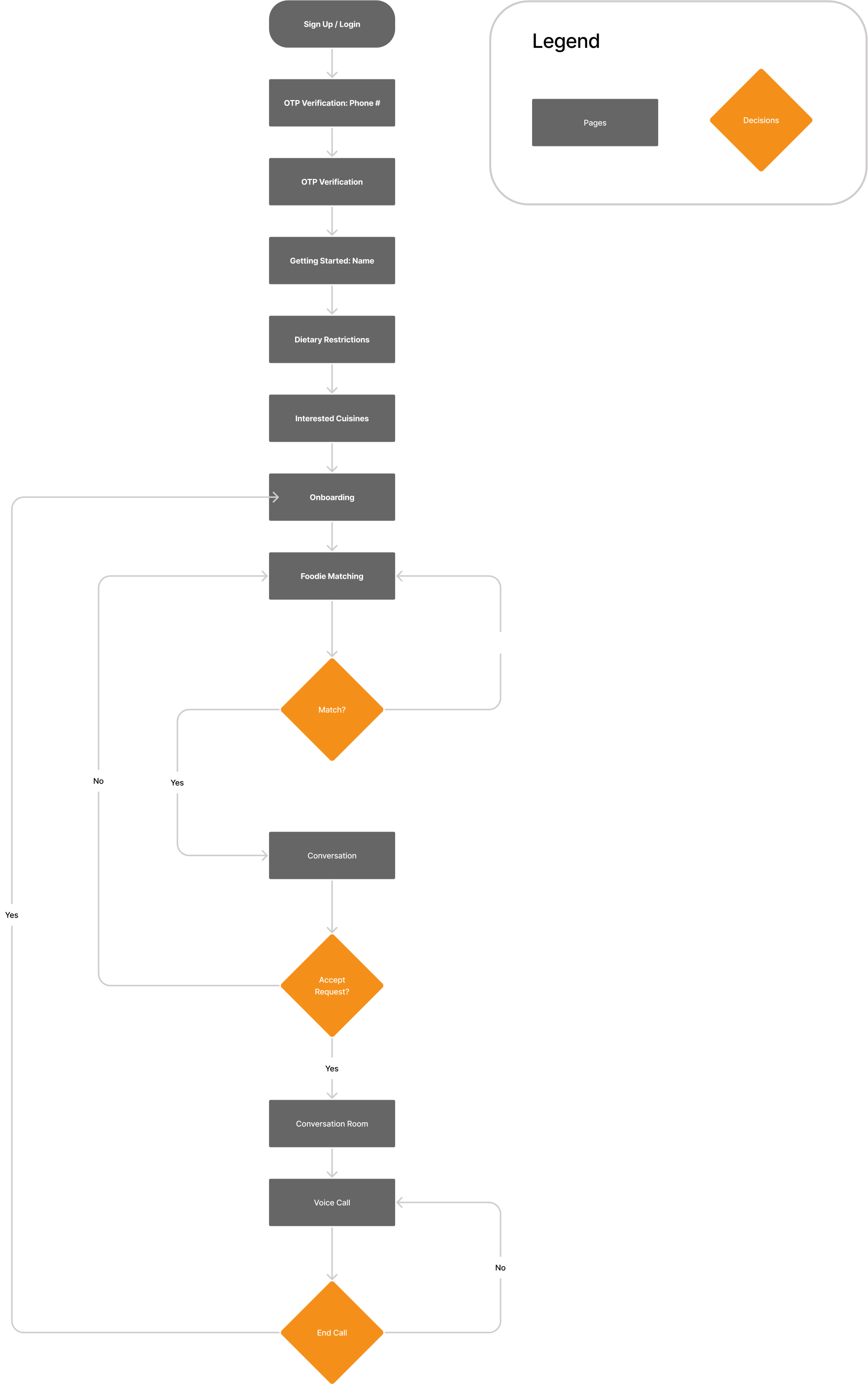
This user flow used the screens from the storyboard to determine what the user would decide to do.
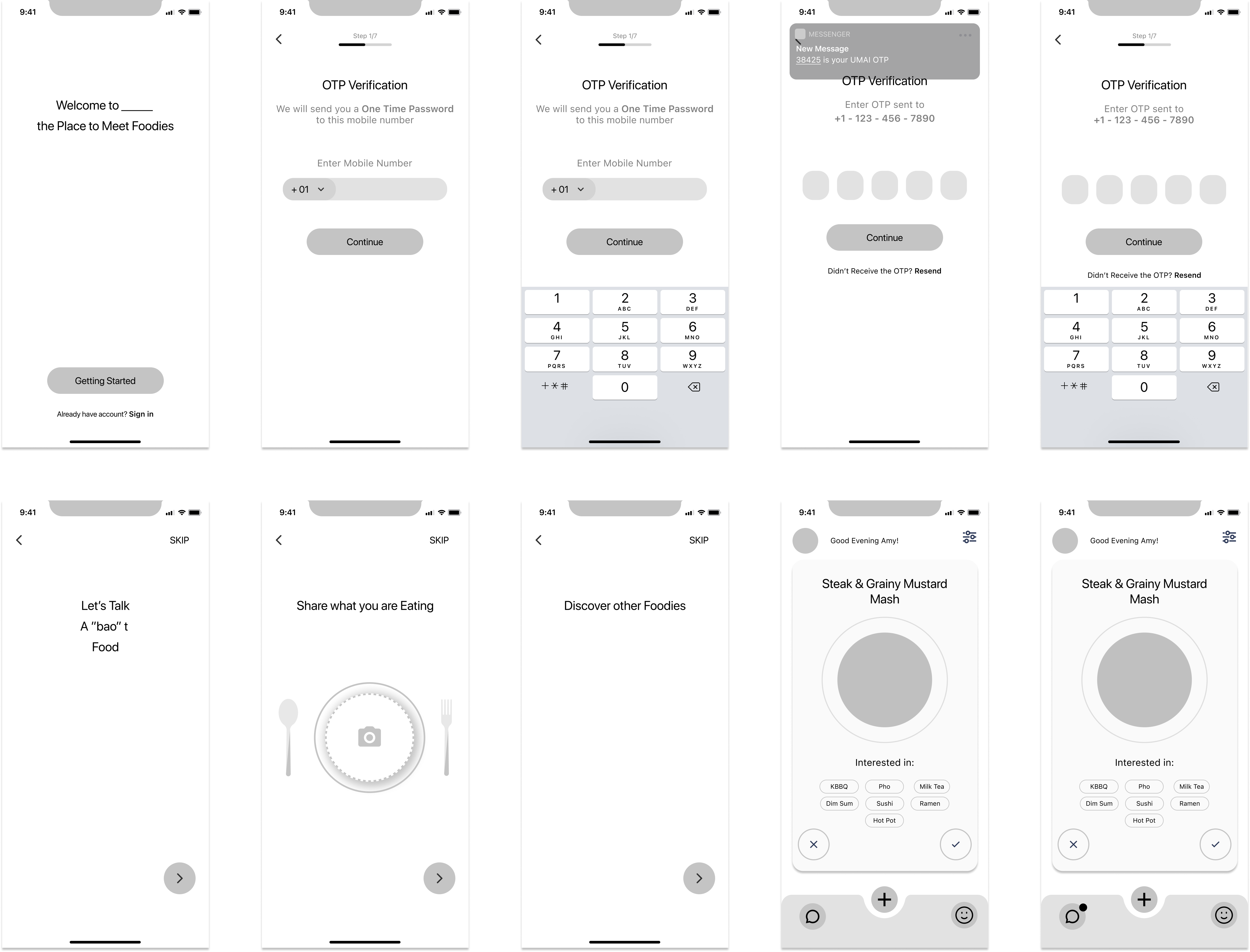
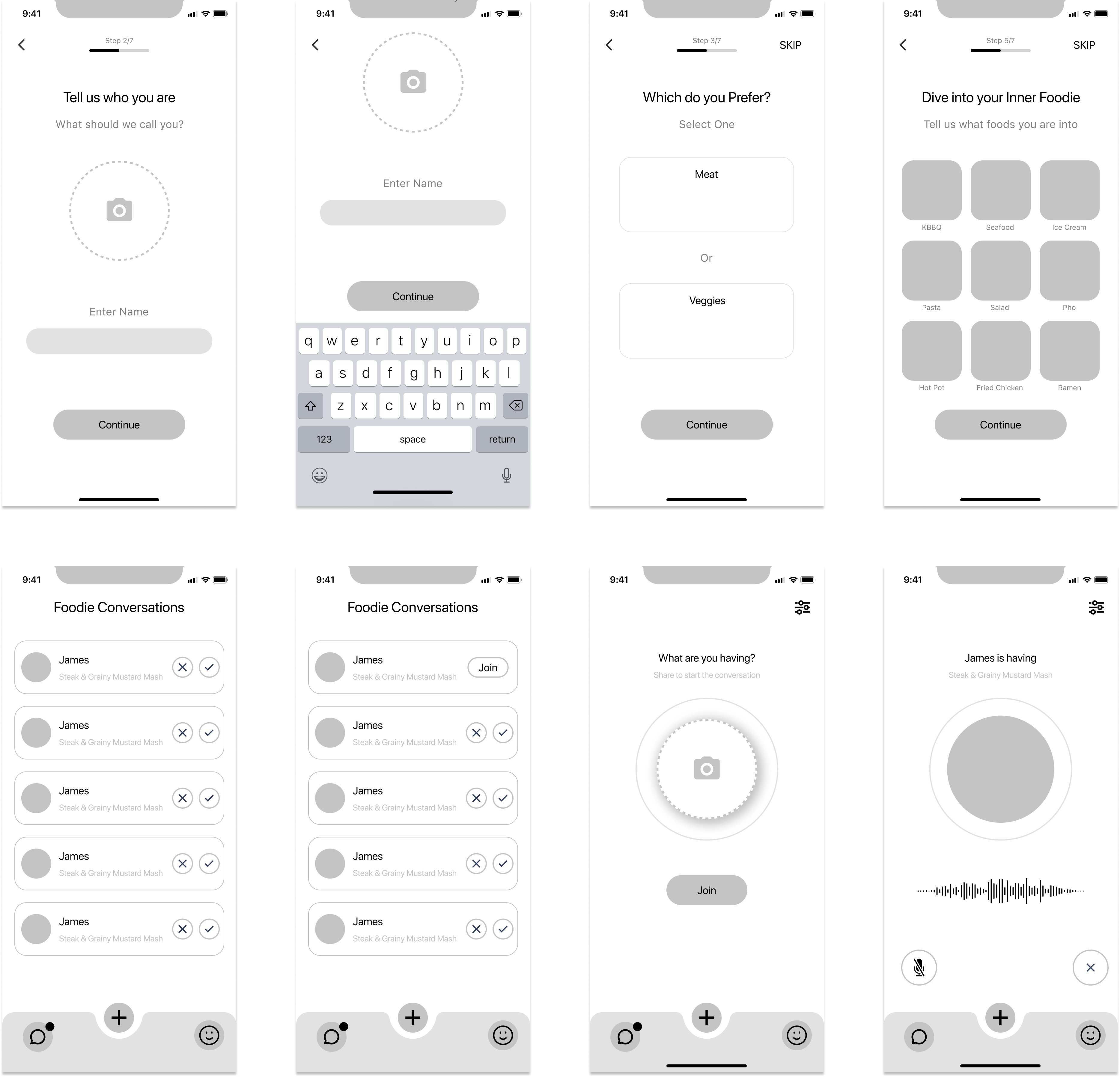
After completing the low fidelity wireframes, I conducted a usability test to verify whether the users encountered any problems. From my findings, I saw that the user's main pain point was, "What if the users do not get matched?".
This helped me determine a new direction that allowed the user to create or join a public table.
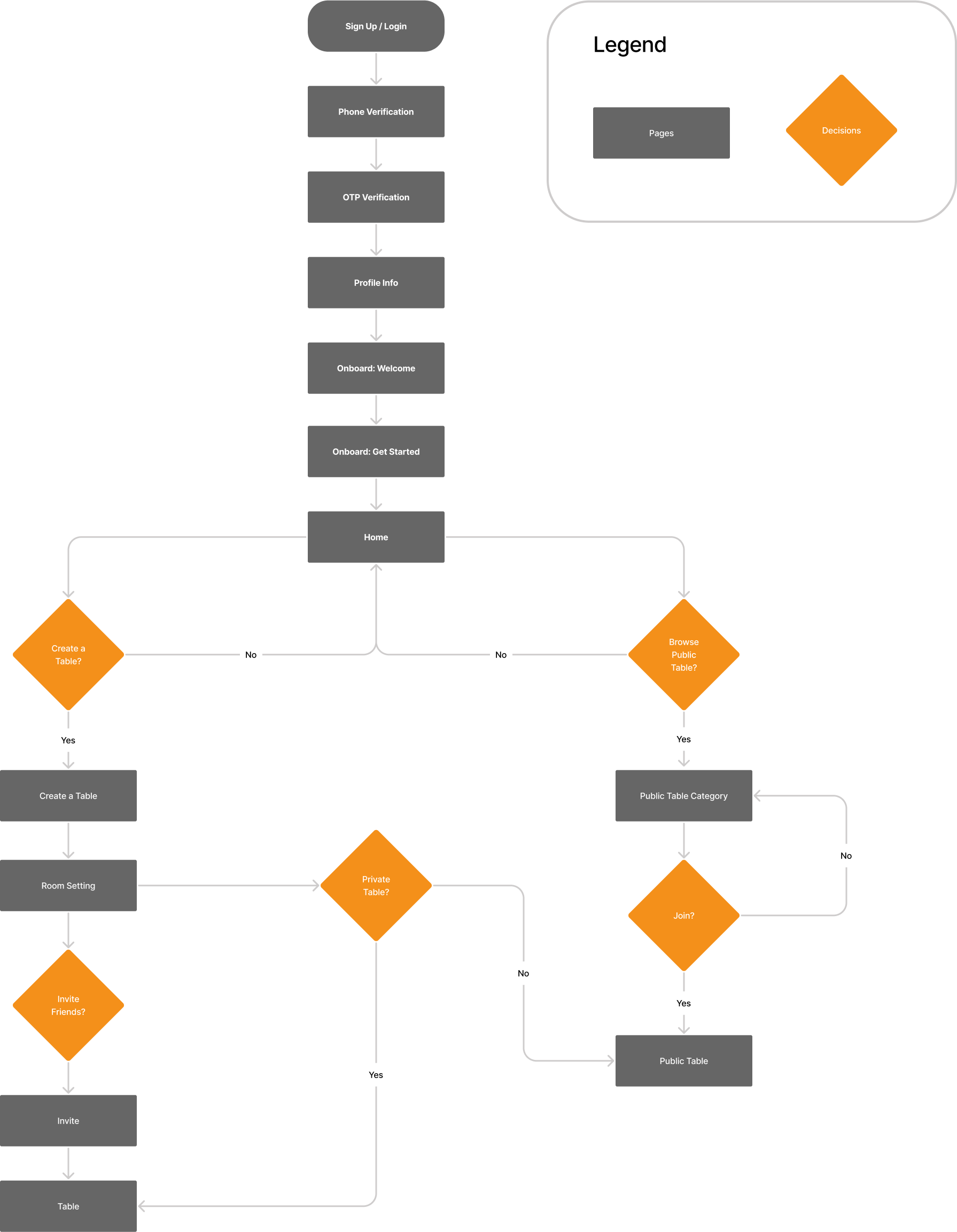
Using the second version of the user flow helped me create the refined low-fidelity wireframe.
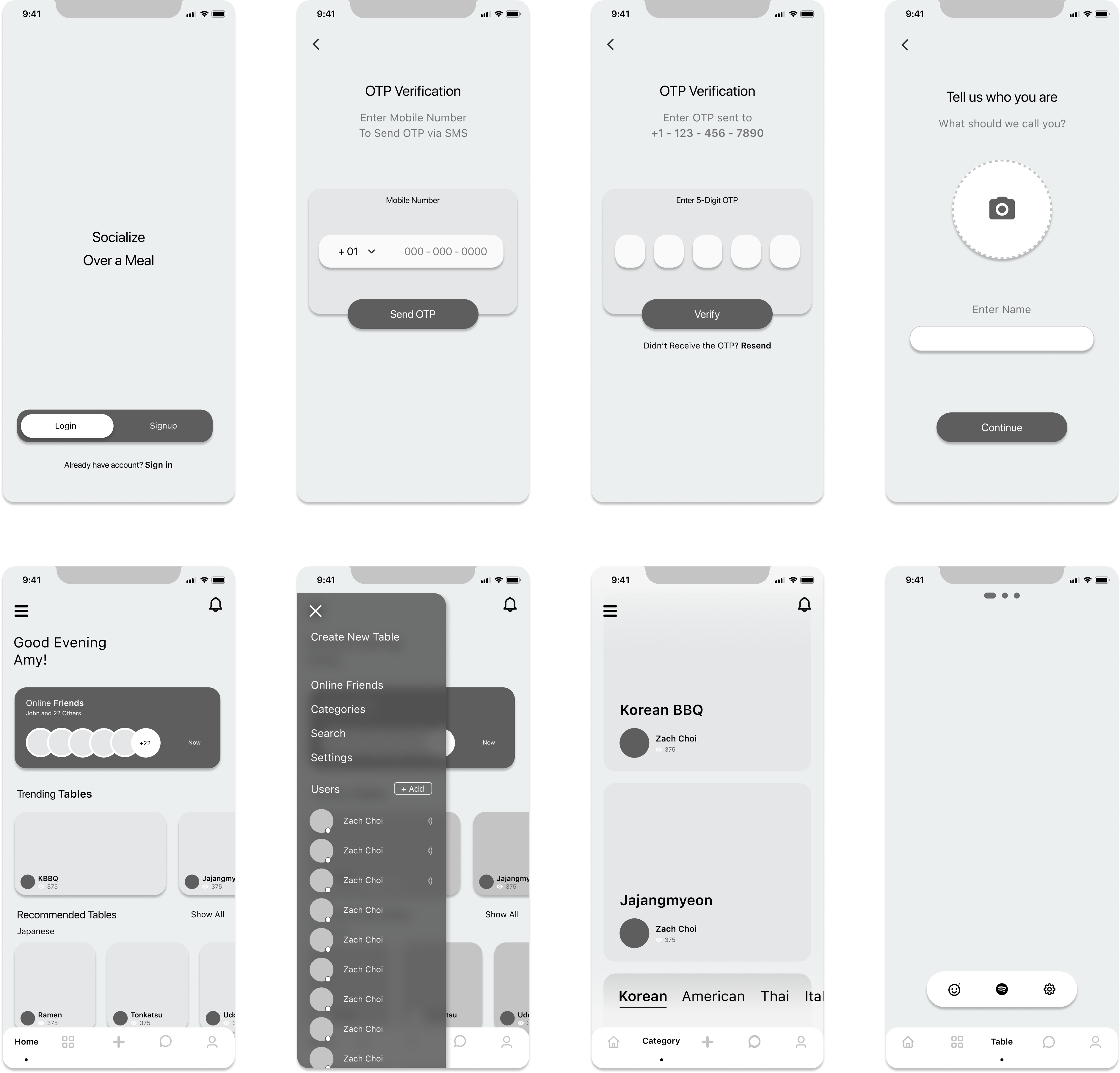
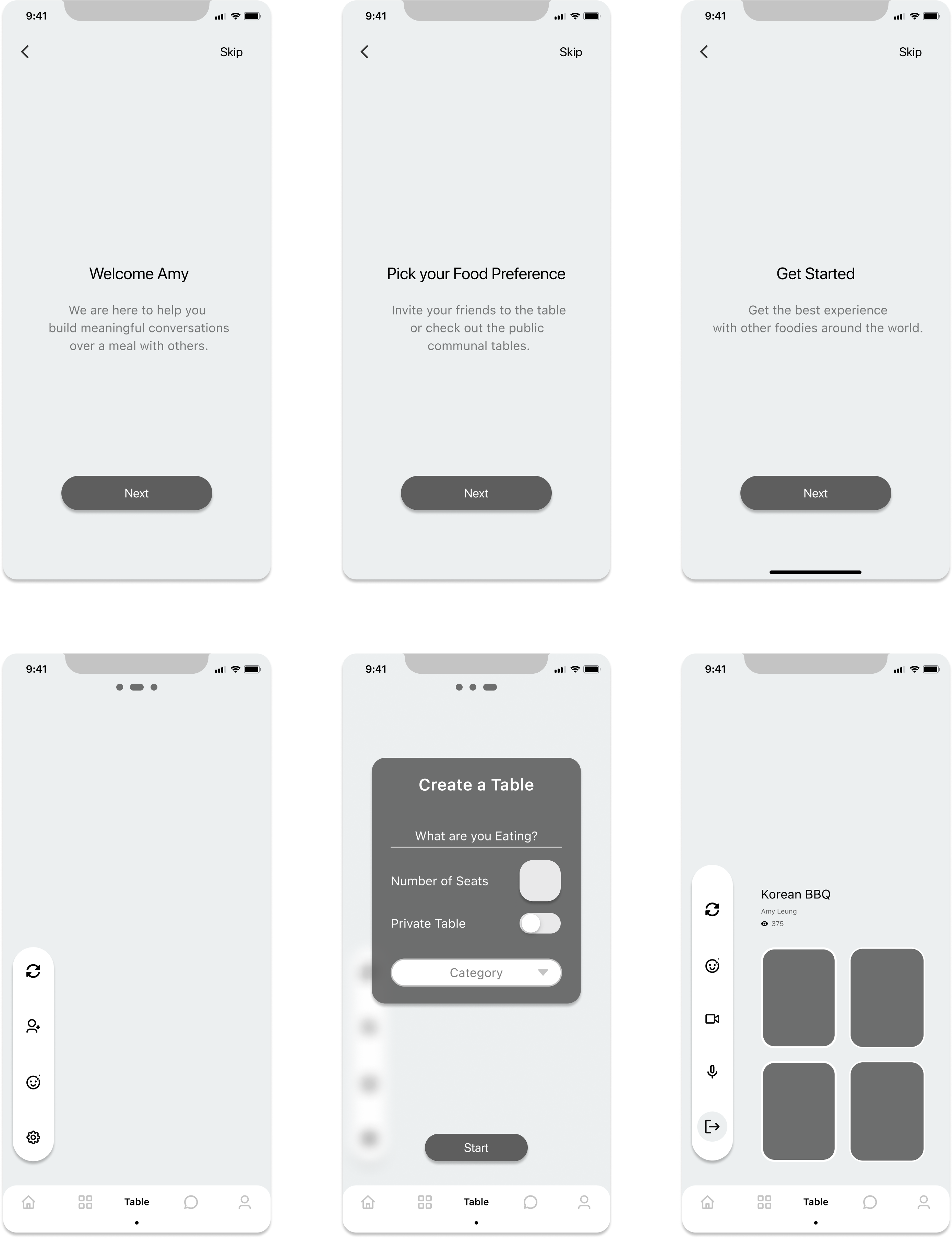
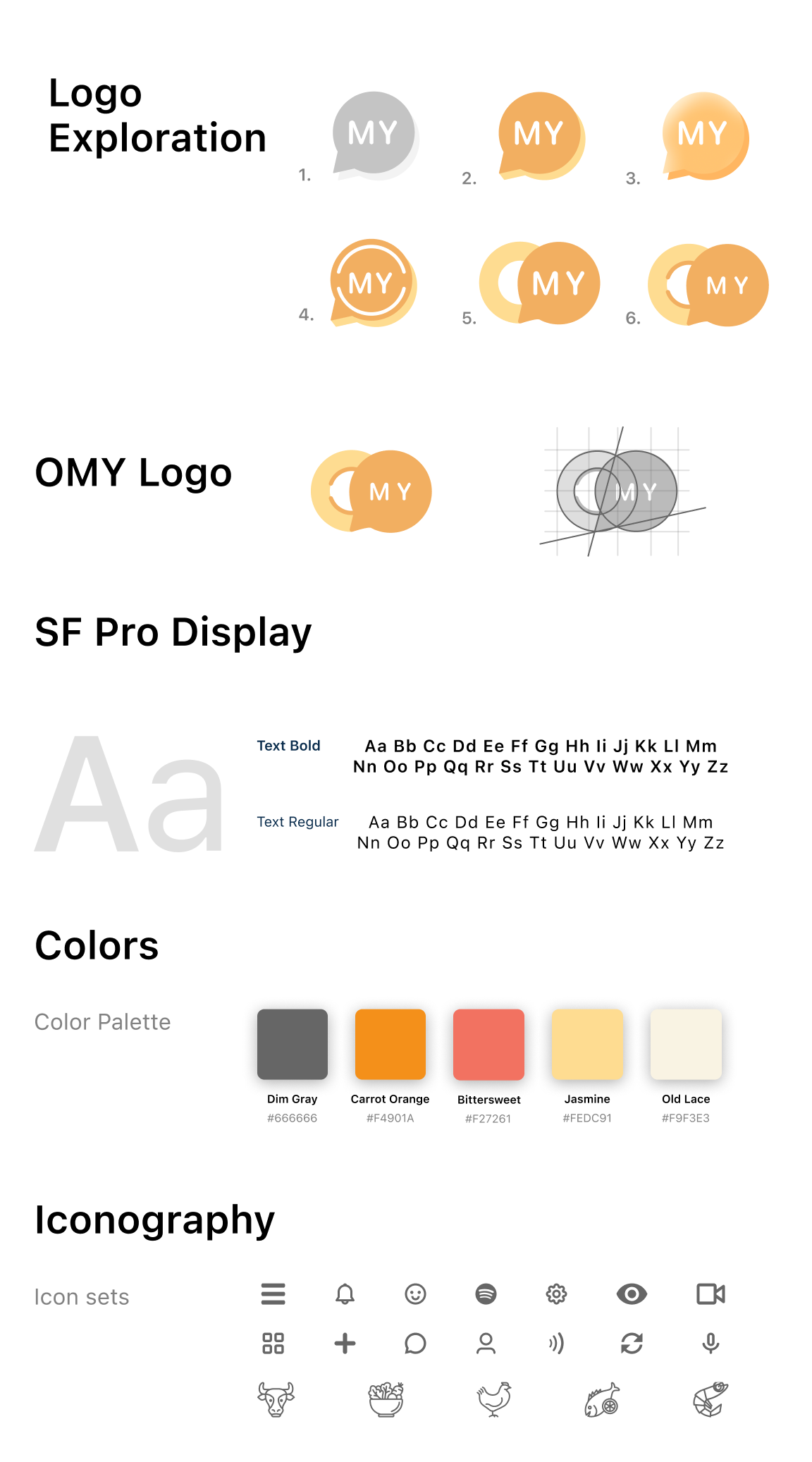
Using the keywords engaging, fun, and simple, I created branding to reflect on those words.
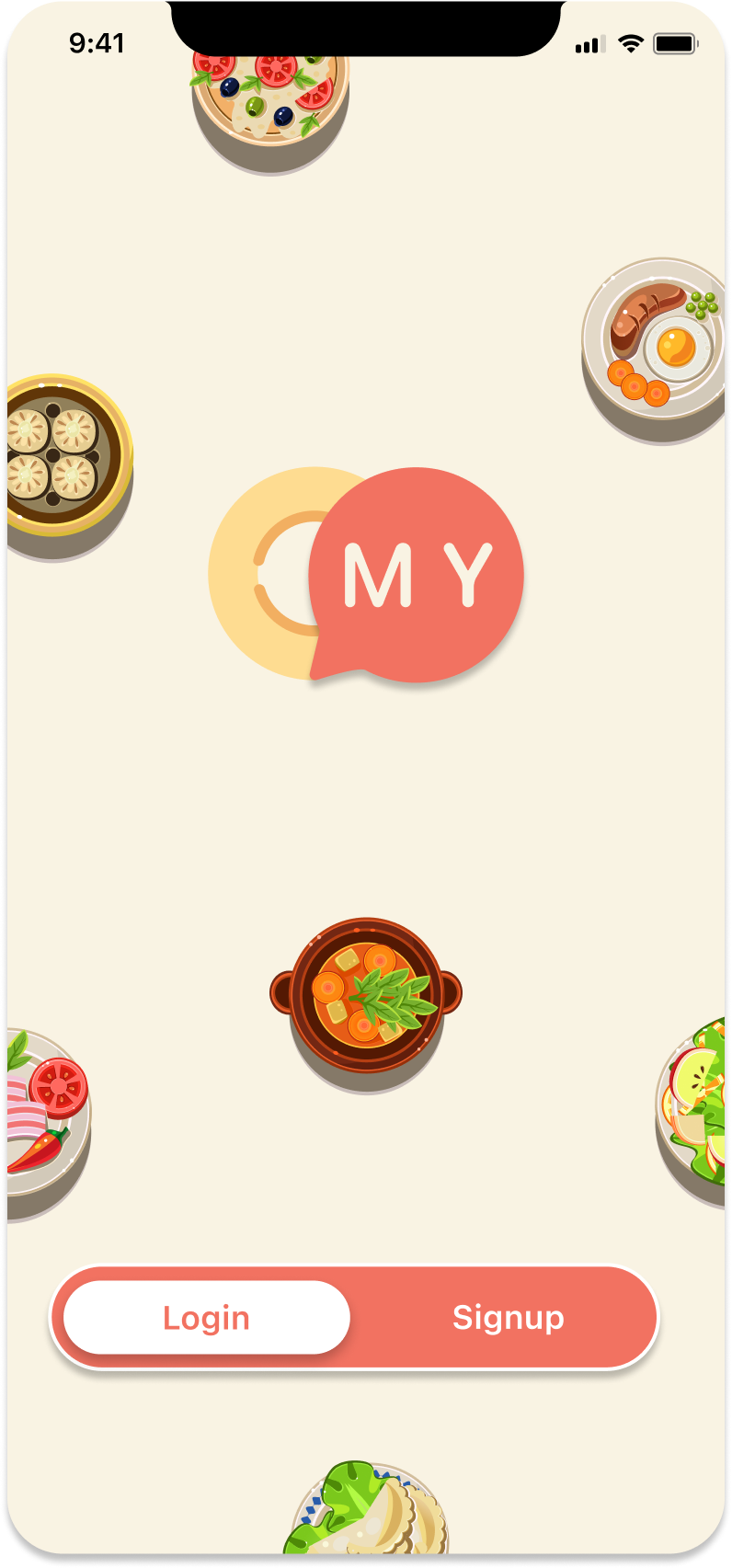
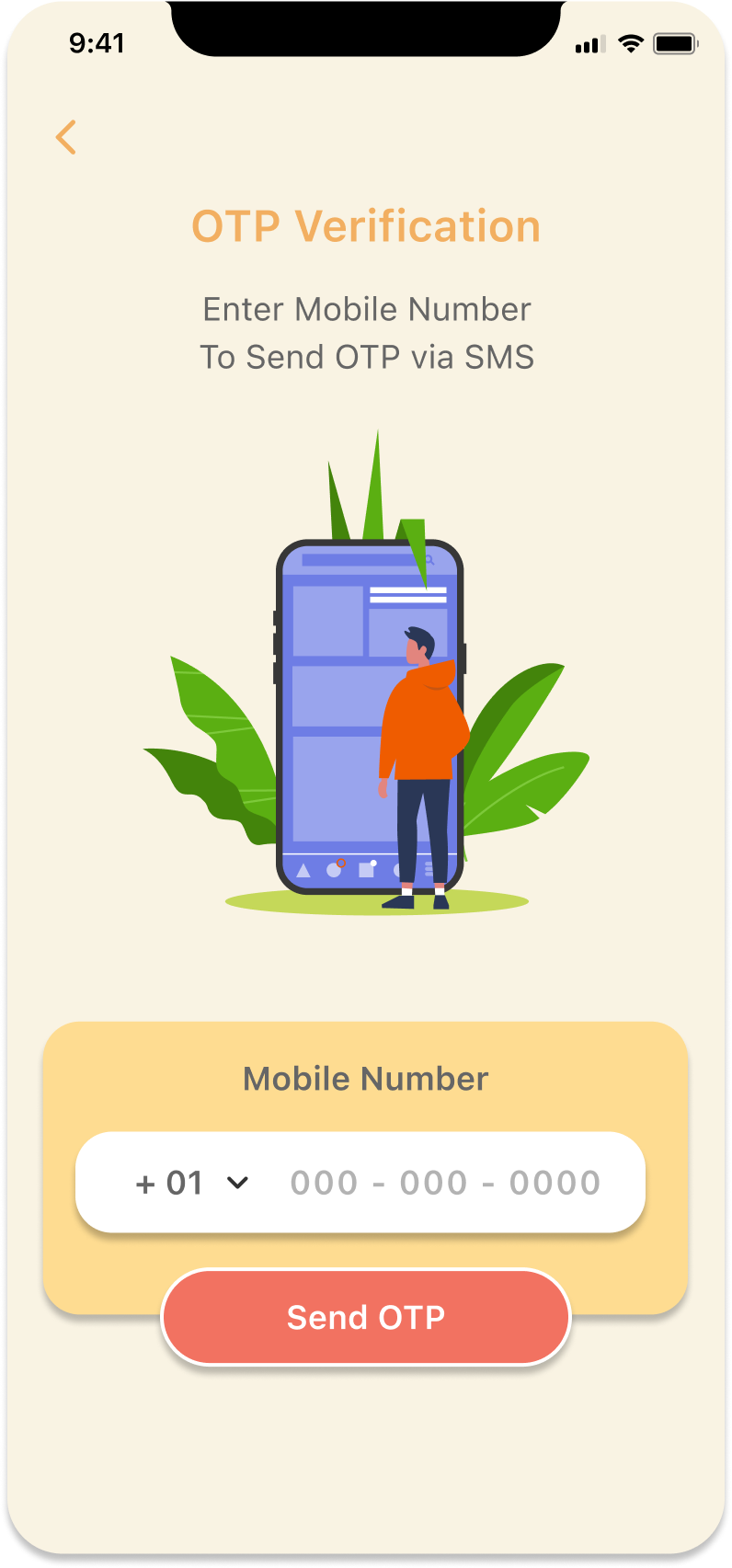
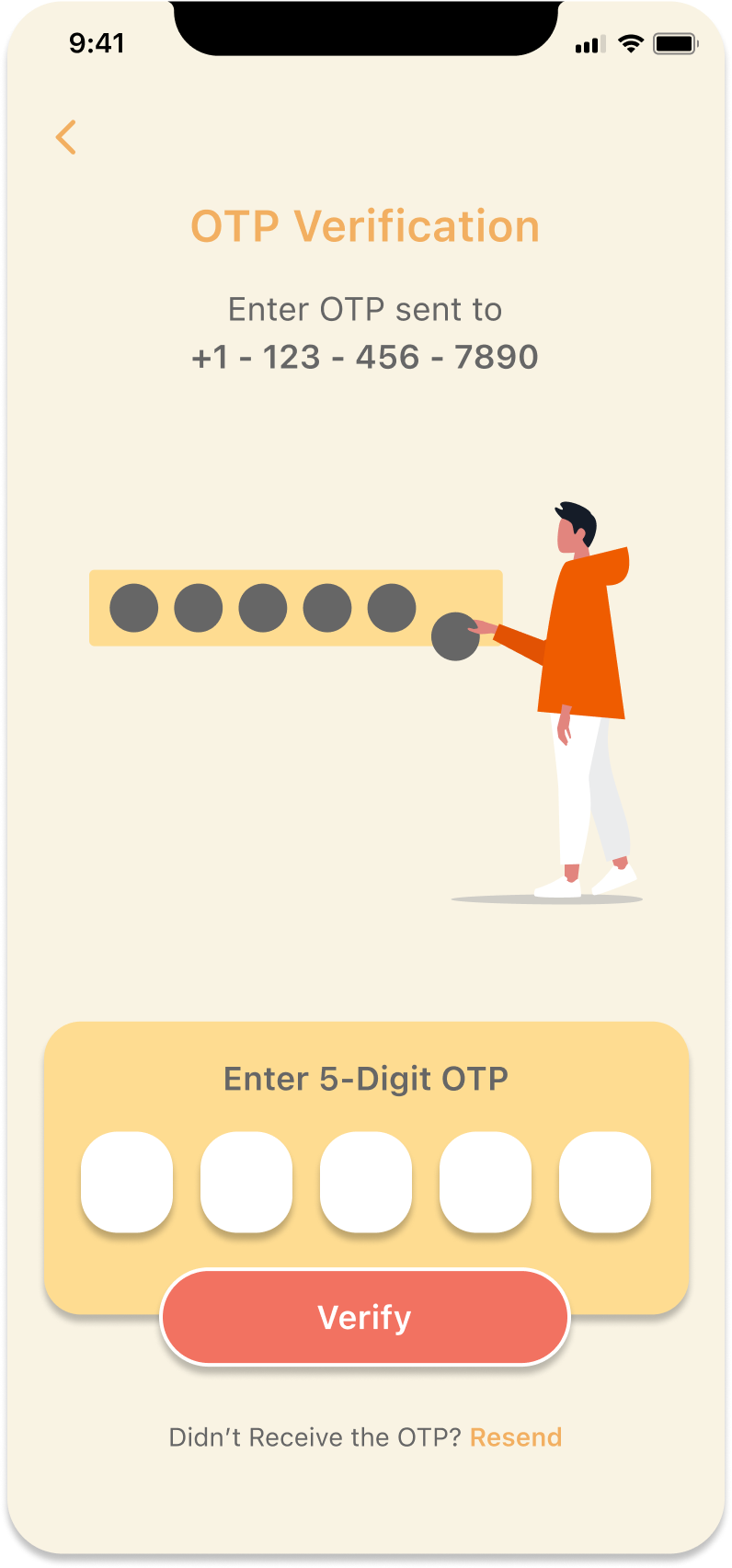

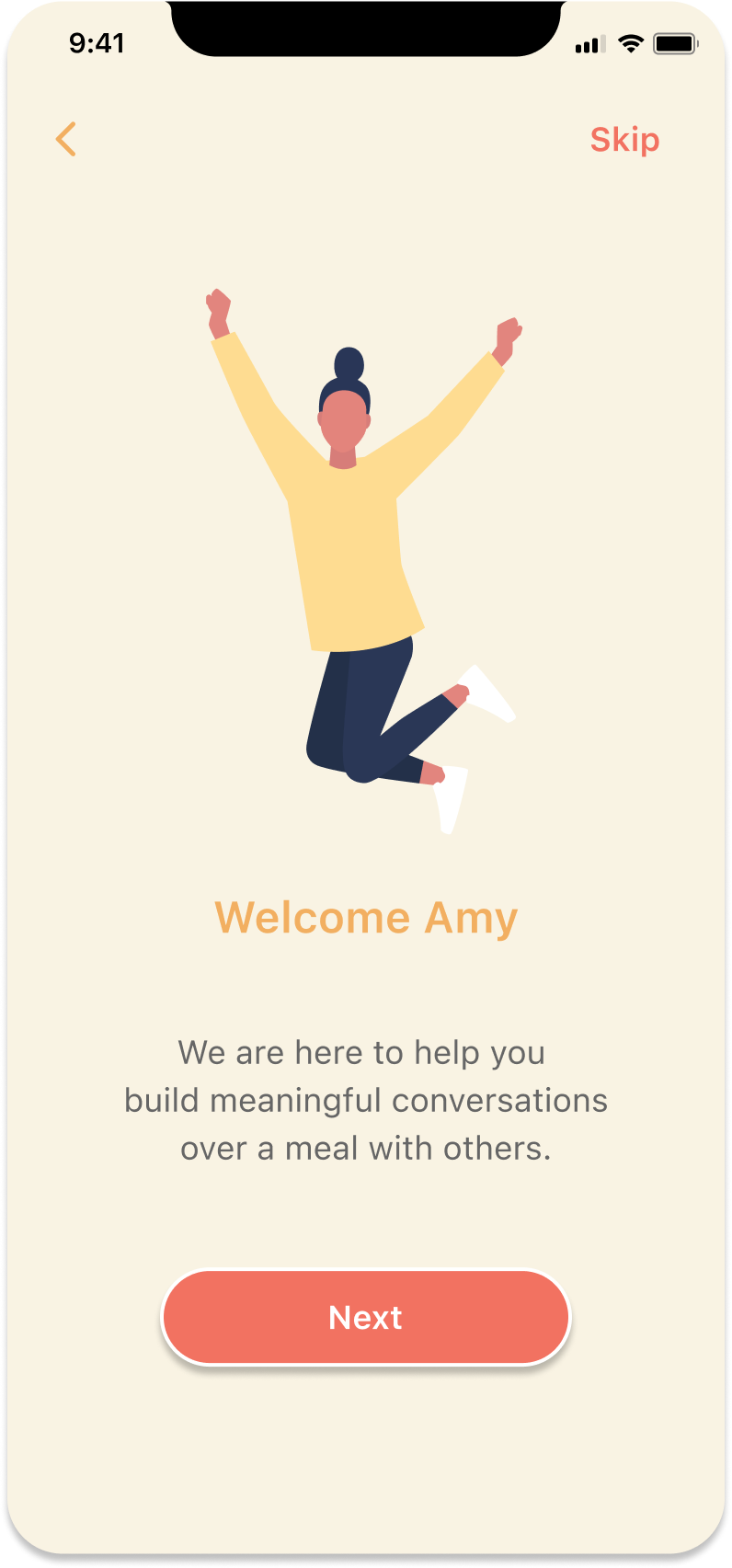
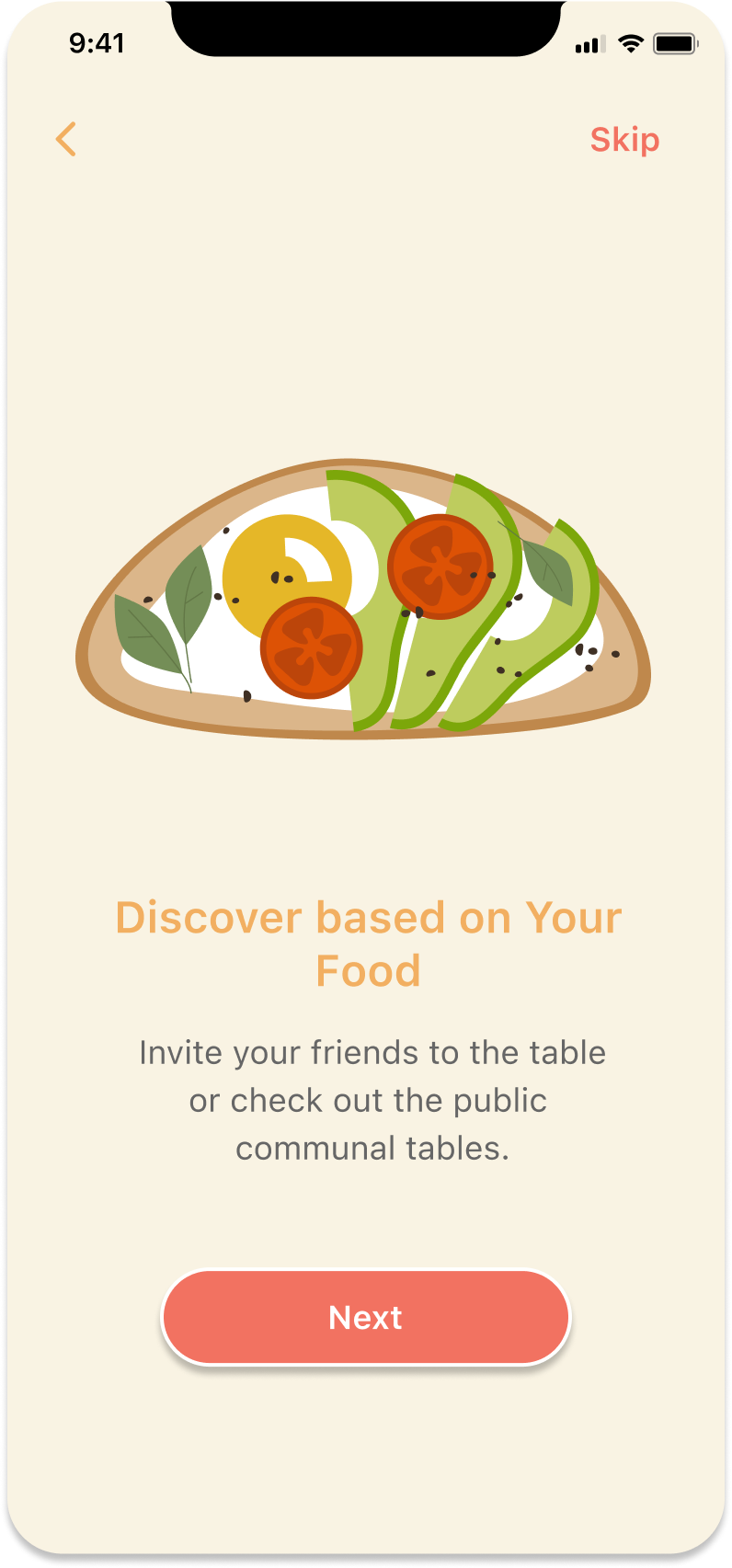
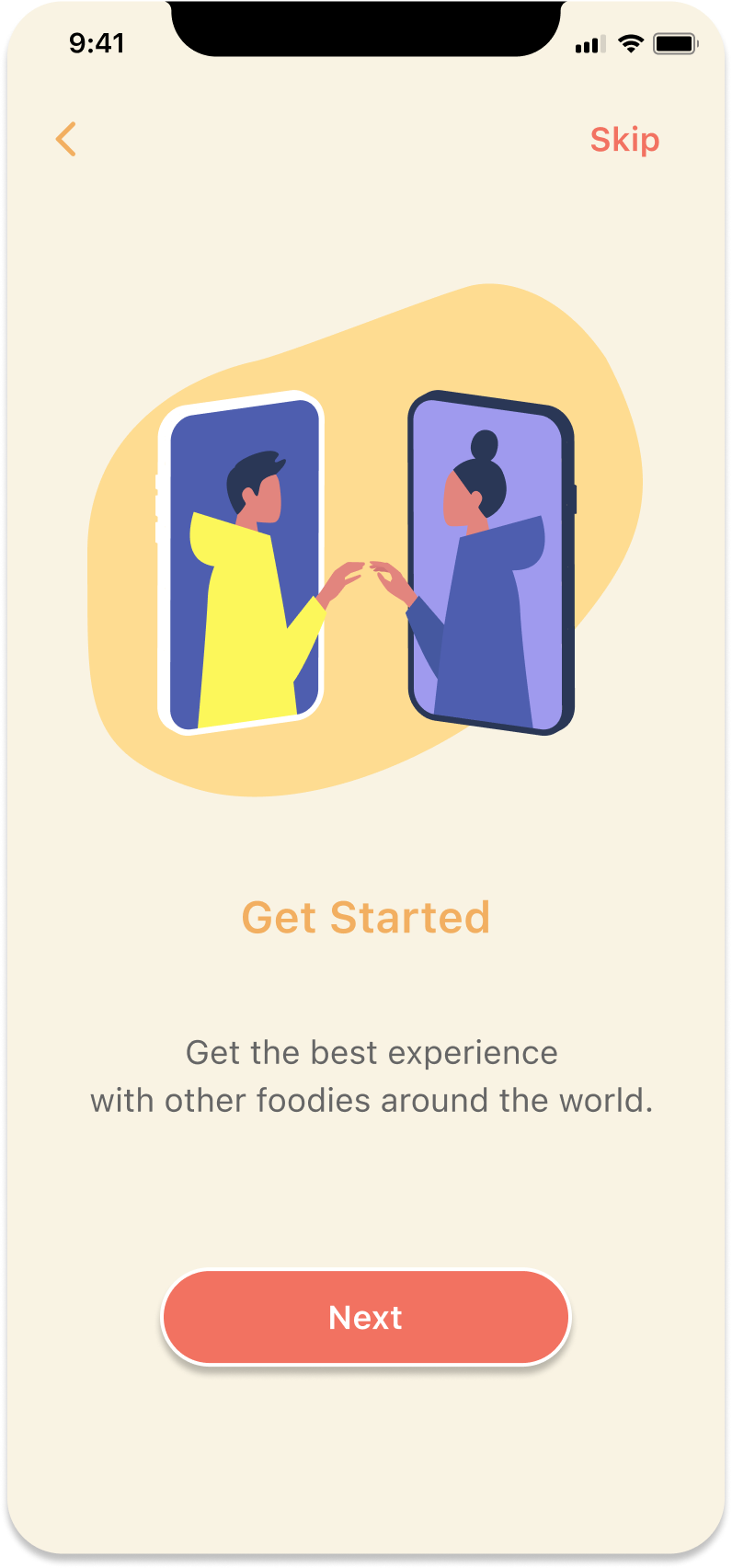
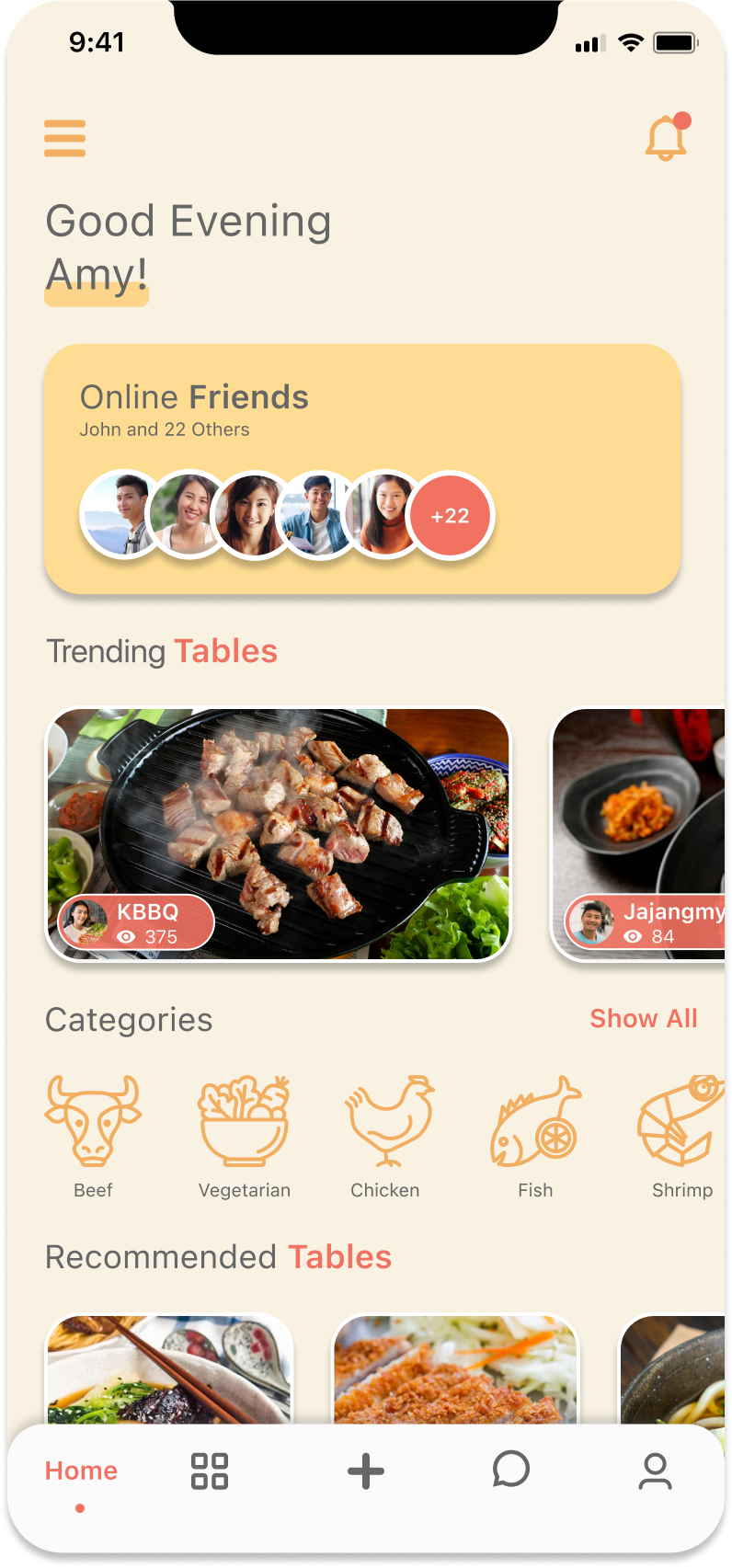
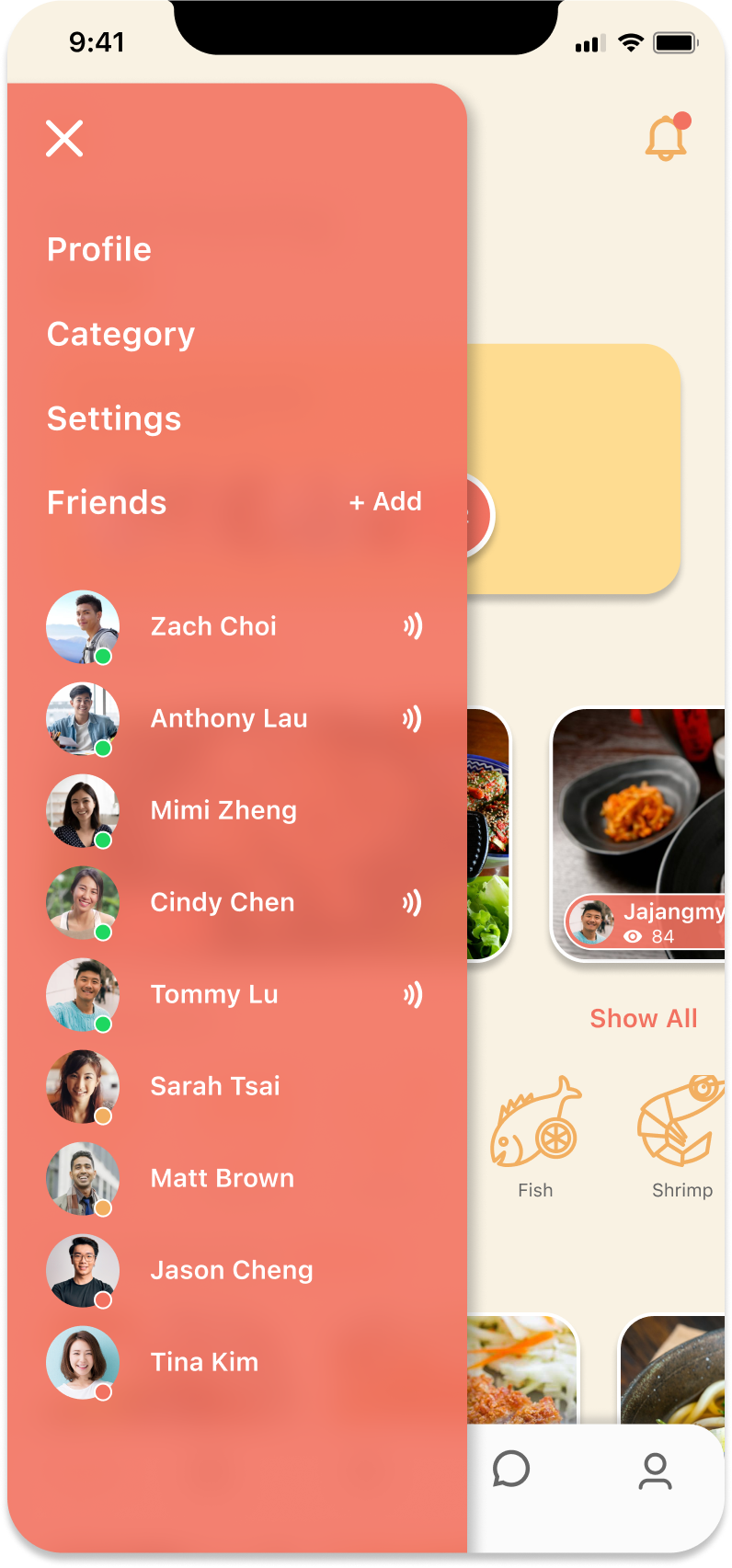
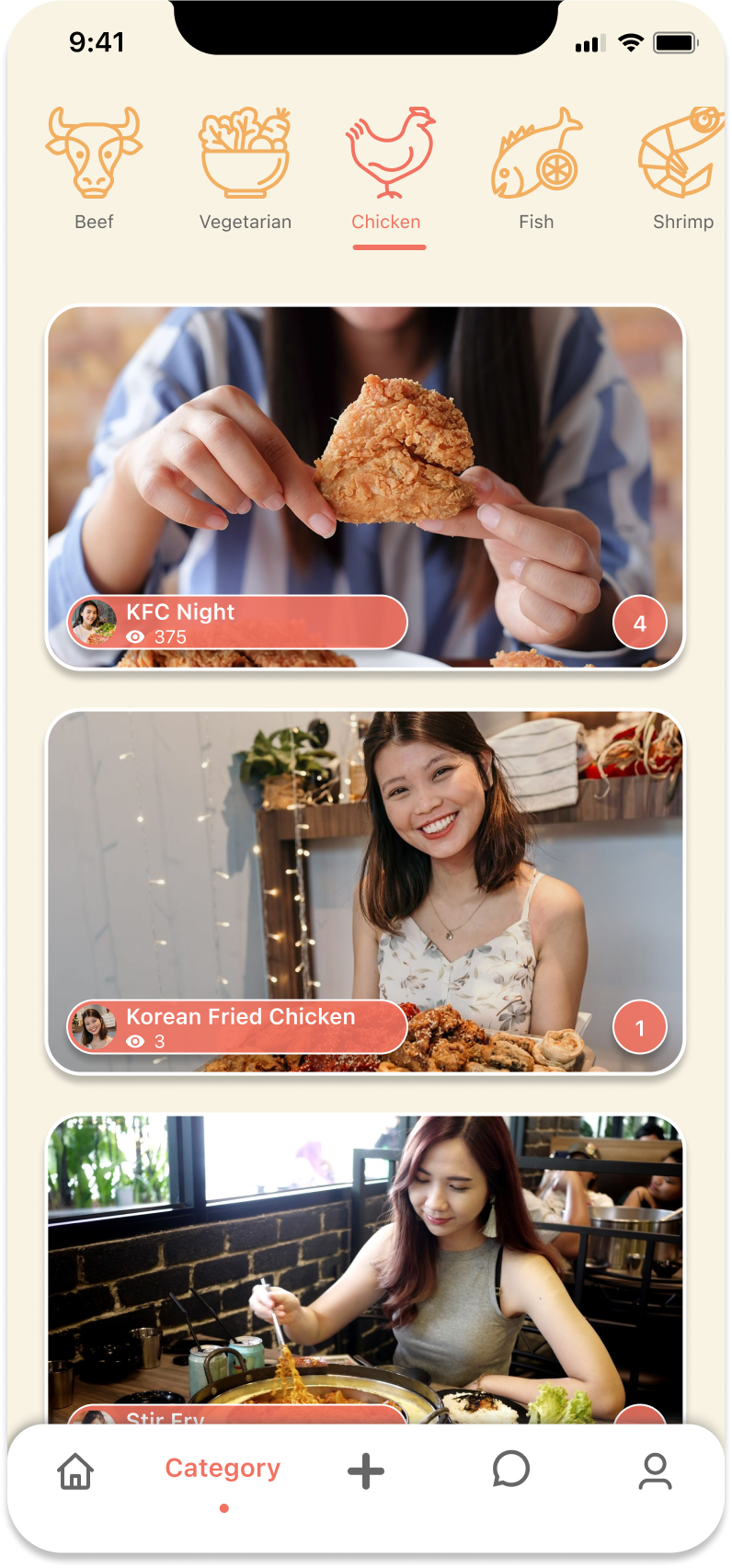
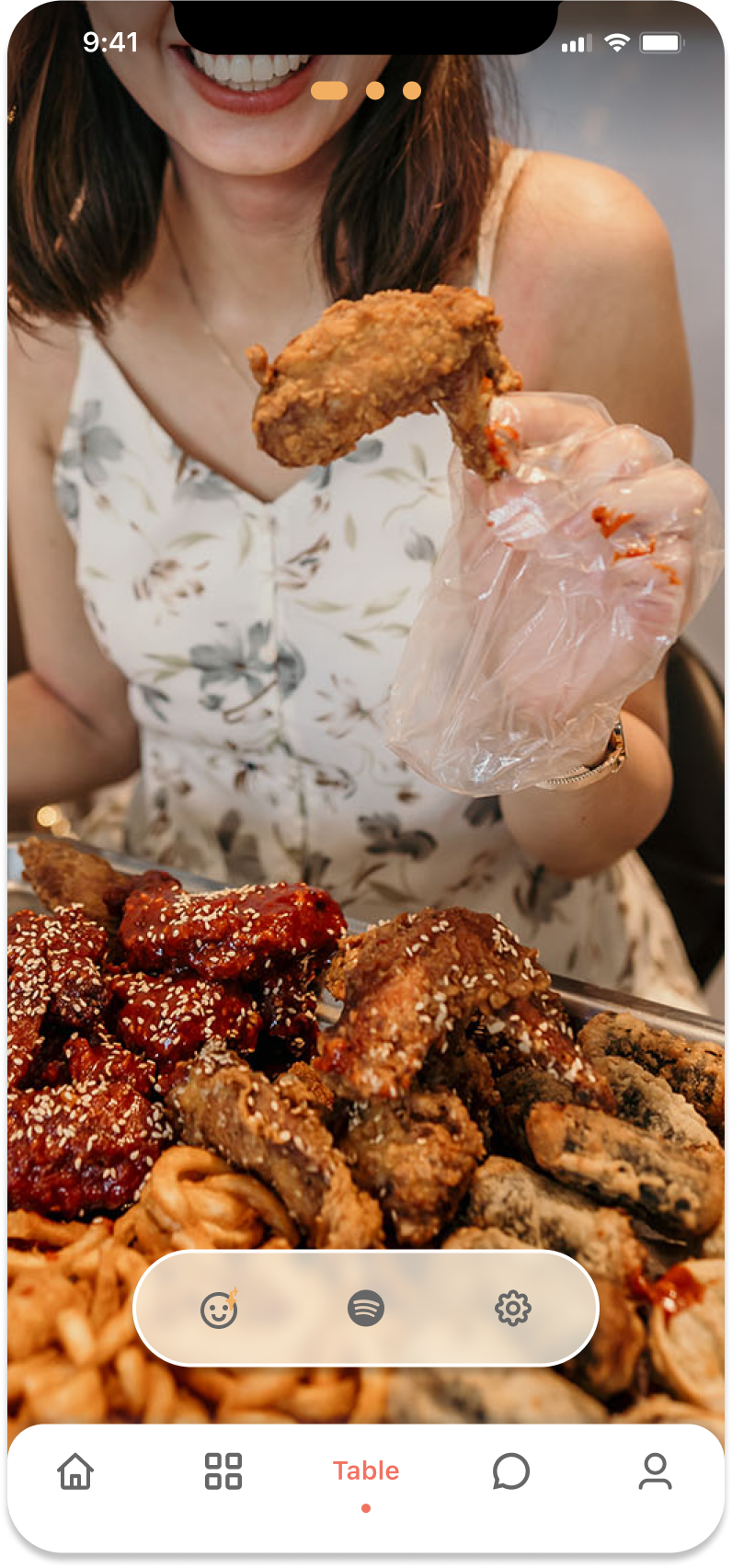
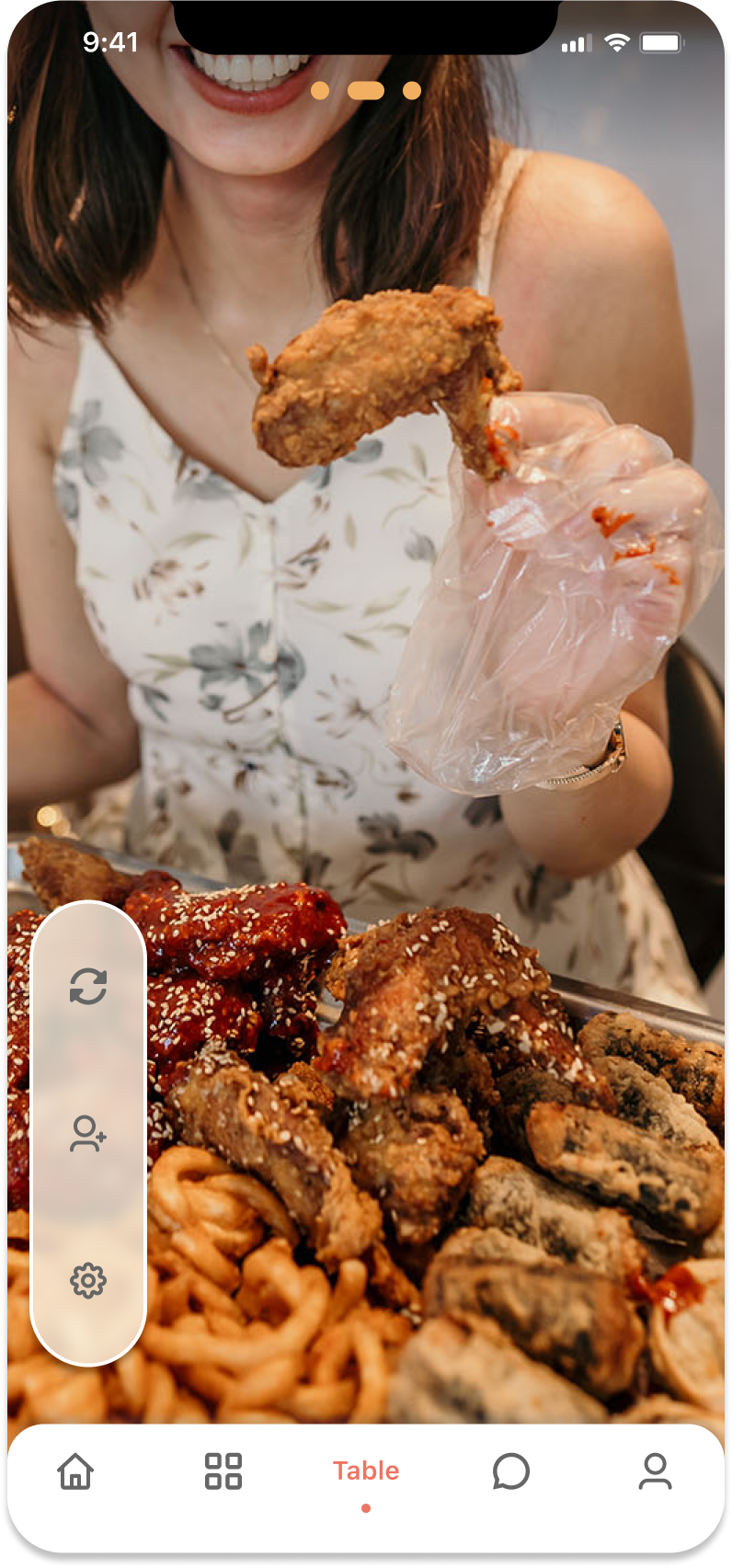
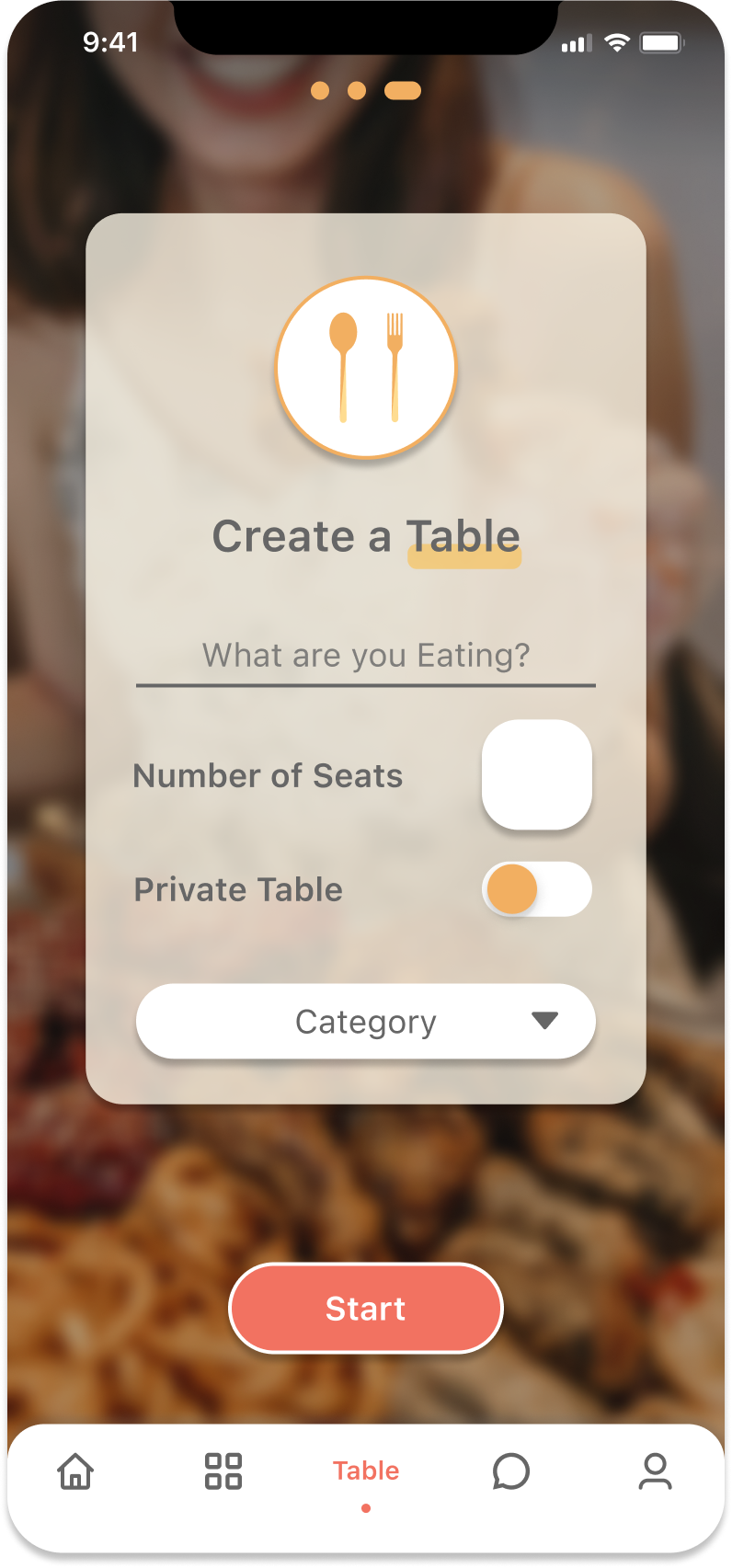
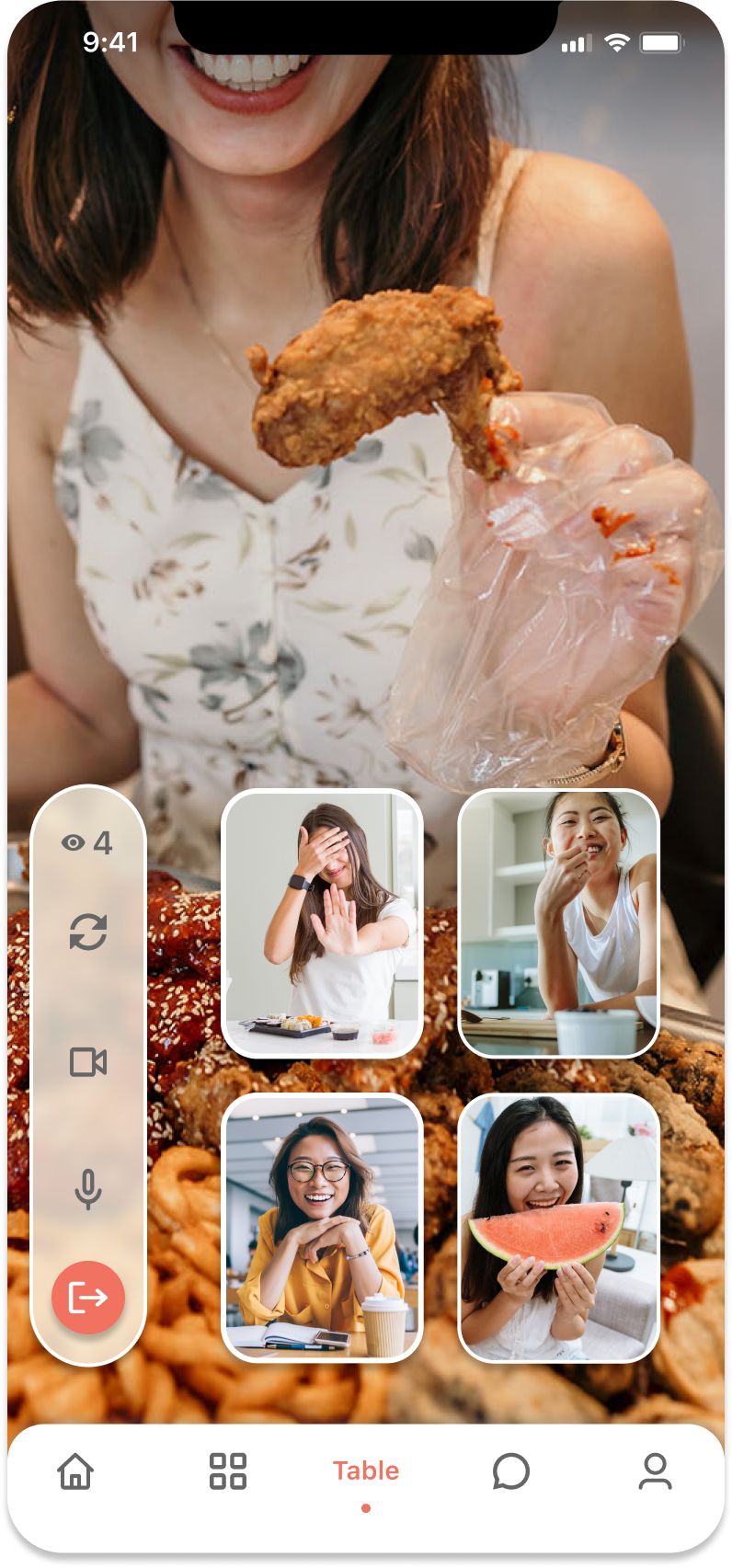
After going through two rounds of iterations on the low-fidelity wireframe, I conducted a usability test after each iteration. This was important to perform this test so I could find areas to improve on early on. Each round had 5-6 participants to determine further changes before moving to the high-fidelity wireframe.
Observe initial impressions
Discover pain points
Get feedback from user
Discover how they interact
OMY High-fidelity prototype
Remote testing using Zoom and Figma web prototype.
10 Participants
Dined out with friend and family
Due to the time constraint of the project I ask primarily my friends to help assist with my usability tests.
Thank you for taking the time to help me with this usability test. I have been designing an app for OMY that allows users to converse and reconnect over a meal. I will use this feedback to help me better understand what works and what doesn't. You will be given a task to follow through, and this should take around 15-20 minutes to complete. Due to the limitation of the prototype, not everything is functional. Feel free to talk out loud about your process and impressions of the feature. Before we begin, will it be ok if I record this session? So I can look back to analyze the feedback. Do you have any questions for me before we begin?
The task is to search for a public table to join based on the type of food you are currently eating. This evening you are eating Korean fried chicken and are looking for others that are eating similar food.
User completes the task
Discover pain points
Find any grey areas
I expect a 90% completion rate
I am anticipating there will be a few participants that will run into some minor problems.
Upon completing my usability testing with 7 participants, the test was successful with a 100% completion rate. Some concerns were what would happen if the Table allowed too many people to it and if there was a limitation to the feature. Overall the participants were excited to use the prototype because they all shared the difficulty of meeting new people during the pandemic.
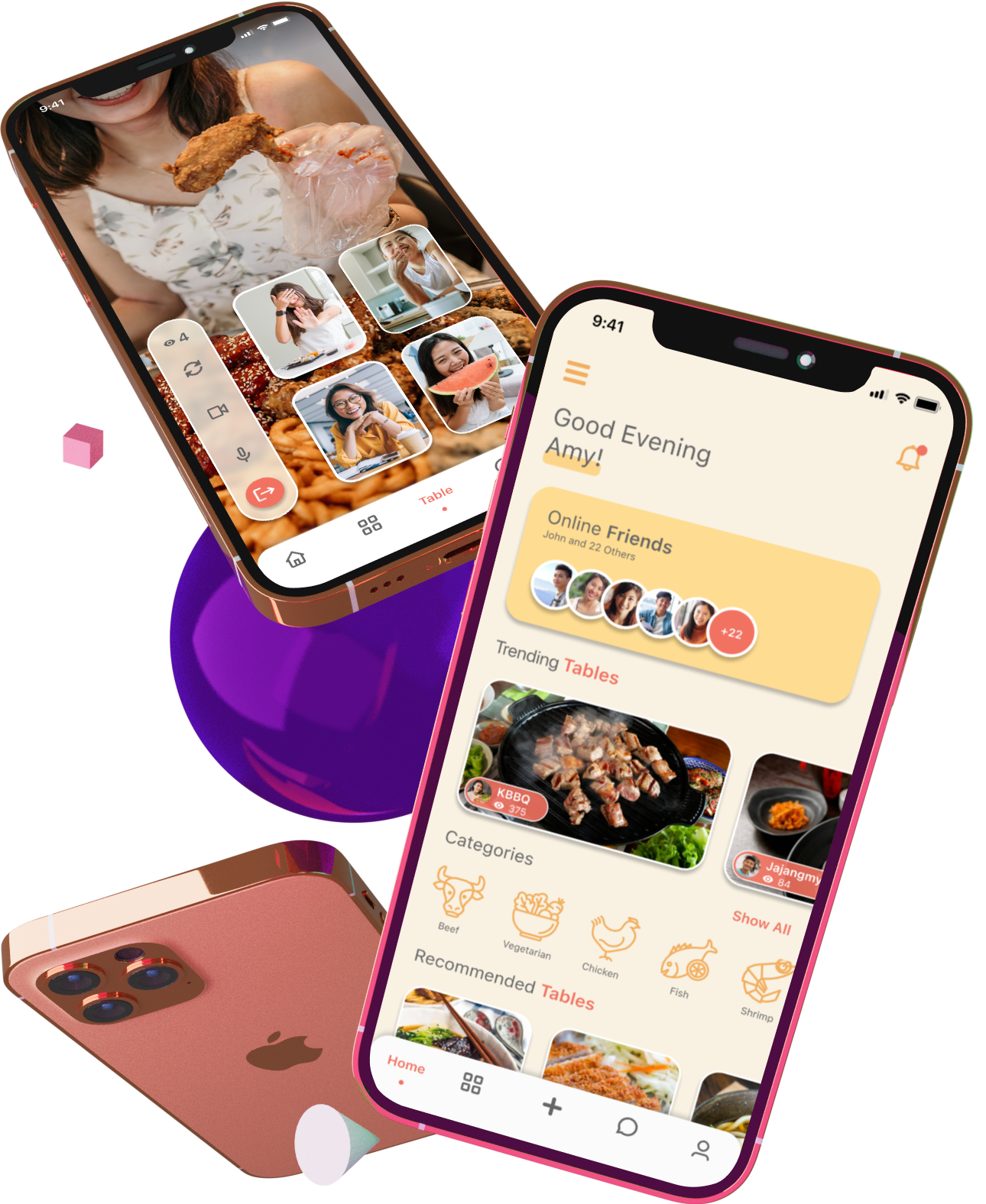 View Prototype
Throughout the design process, I had a few setbacks during the research phase. It was challenging to narrow down the direction I wanted to go in to bring the restaurant experience home. Even though there were difficulties during the design phase, I learned that it was necessary to create an enjoyable app. If there was more time for the project, I would have loved to explore and refine features in OMY.

© 2022 Tuan Diep